

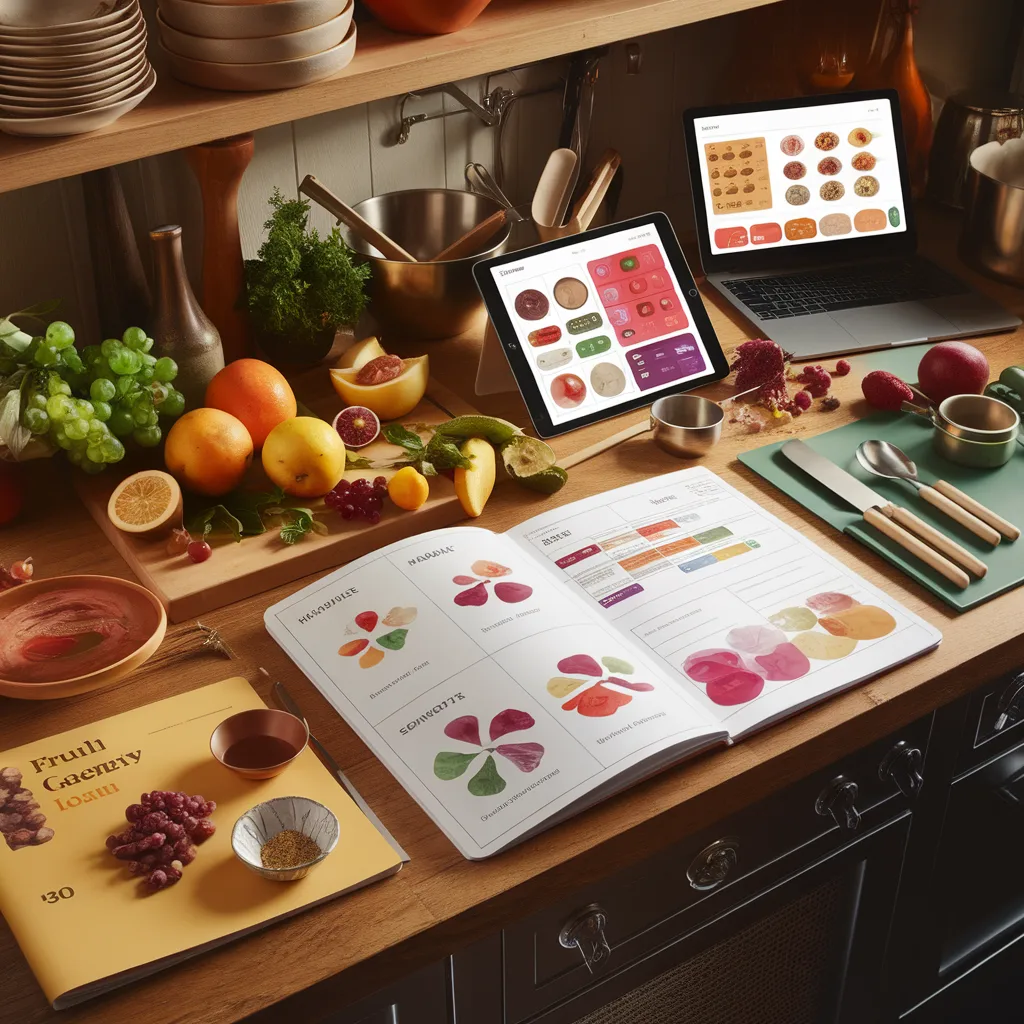
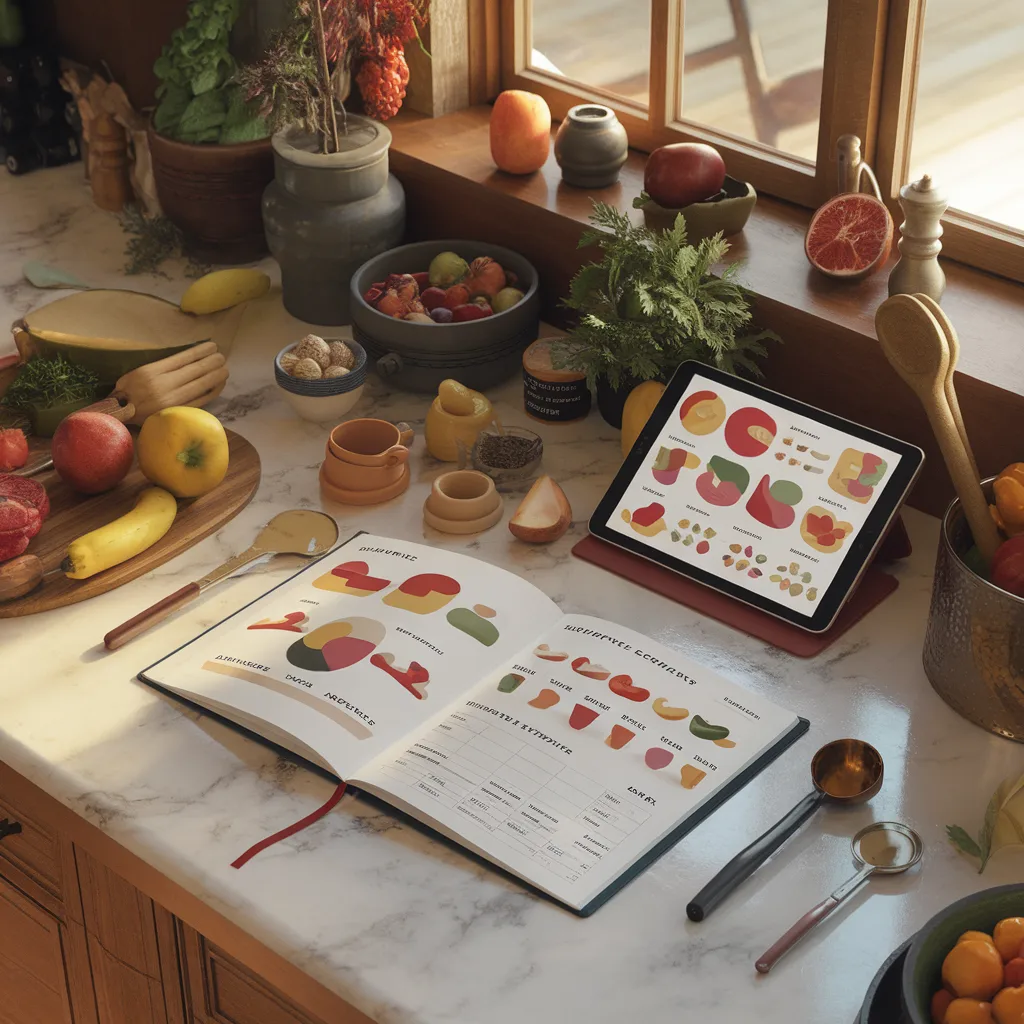
Seasonal Flavor Innovation Workbook
The Structured Creative System for Developing, Documenting, and Commercializing Seasonal Bakery Products
April in a bakery smells like a problem.
Not because there is anything wrong with spring — but because the rhubarb is available, the blood orange season just ended, the elderflower is still three weeks away, and the “spring collection” that looked inspired in February’s planning session now needs to be in production in twelve days.
Seasonal flavor development is genuinely one of the most creatively satisfying aspects of running an artisan bakery. It is also one of the most consistently under-planned. The baker who gets it right has a system: a flavor calendar, a pairing framework, a development process that moves from concept to tested formula before the ingredient window closes, and a cost structure that accounts for the premium price of true seasonal produce without pricing the product out of the market it is meant for.
The baker who does not get it right launches a rhubarb thing in late May when the rhubarb is borderline and the novelty has worn off, at a price point that doesn’t cover the waste from three failed test batches, and wonders why seasonal products feel like more effort than they are worth.
This workbook is the system. 🌸
THE FLAVOR CALENDAR FRAMEWORK
BUILDING THE TWELVE-MONTH INGREDIENT MAP
The Seasonal Produce Window Documentation
The foundational tool in the workbook: the twelve-month ingredient calendar that maps the actual availability windows for seasonal produce relevant to bakery applications — not the theoretical window from a general food calendar, but the practical window for the baker’s specific region, accounting for local growing seasons, import availability, and the quality curve within each ingredient’s window (the peak quality week that produces the best flavor versus the shoulder weeks at either end).
The calendar covers four categories of seasonal ingredient:
Fresh fruit: The stone fruit progression (cherry through apricot through peach through plum through nectarine), the berry sequence (strawberry through raspberry through blackberry through blueberry through blackcurrant), the citrus windows (blood orange, Seville orange for marmalade applications, Meyer lemon, yuzu availability by region), the pome fruit season (early apple varieties through late keeping varieties, quince, pear progression), and the early spring and late autumn specialty fruits (rhubarb’s two windows, gooseberry, damson, greengage).
Fresh vegetables in sweet applications: Courgette/zucchini for quick breads, pumpkin and butternut for autumn spiced applications, sweet corn for summer sponge and custard applications, fresh ginger timing, and the beet season for red velvet and chocolate enhancement.
Nuts and seeds: Fresh walnut season (the brief window when fresh rather than dried walnuts are available — an entirely different baking ingredient), fresh chestnut, hazelnuts in autumn, and the flowering seasons for edible flowers (the decoration category that requires the most precise seasonal timing).
Aromatics and botanicals: Elderflower (the narrow May-June window in most temperate regions), lavender flowering, rose petal quality window, fresh herb availability for savoury-adjacent sweet applications (thyme, rosemary, basil), and the seasonal variation in spice quality (the new-season spice deliveries that arrive in autumn and produce noticeably more vibrant flavor than the prior year’s stock). 🗓️
THE FLAVOR ARCHITECTURE FRAMEWORK
The Three-Layer Flavor Structure
The workbook’s core design principle for seasonal products: every successful seasonal flavor profile is built on three layers working together, not one star ingredient doing all the work.
The Dominant: The primary seasonal ingredient. The flavor the product is named for, the thing that communicates the season. The dominant should be present and recognizable — not buried in the formula, not so subtle that it requires explanation, but present at a level where a customer can identify it without being told.
The Supporting: The ingredient that enhances the dominant without competing with it. The supporting ingredient often works subconsciously — the customer knows they like the product but cannot identify why it is more interesting than a similar product built on the dominant alone. Classic supporting relationships: strawberry supported by black pepper, apple supported by cardamom, raspberry supported by rose, peach supported by vanilla bean, pear supported by blue cheese or gorgonzola (in savoury-adjacent applications), lemon supported by thyme.
The Grounding: The base note that gives the flavor profile depth and prevents it from being one-dimensional. The grounding ingredient is typically not seasonal — it is a constant: brown butter, caramelized white chocolate, dark caramel, miso, toasted oat, almond paste, or another deep, complex flavor that anchors the more volatile seasonal notes above it.
The workbook includes the flavor pairing matrix for fifty seasonal ingredients, documenting the validated supporting and grounding options for each and the rationale behind each pairing — the flavor compounds they share or contrast, the textural relationships, and the applications where each pairing performs best. 🎨
The Flavor Intensity Calibration Guide
The practical challenge in seasonal baking: fresh seasonal fruit carries a flavor intensity that changes across its window, across years, and across growing conditions. The rhubarb that tastes sharply acidic in May tastes milder and sweeter in June. The strawberry at peak season in June delivers twice the flavor intensity of the same variety in early May.
The calibration guide covers: the visual and taste indicators for ingredient intensity at different points in the season, the formula adjustment approach when the raw ingredient delivers more or less flavor than the tested baseline, and the extraction techniques that stabilize flavor intensity regardless of raw ingredient variation (the reduction, the infusion, the powder, the purée with concentration step).
THE PRODUCT DEVELOPMENT PROCESS
STAGE ONE: THE CONCEPT BRIEF
The one-page document completed before any baking happens. The seasonal ingredient, its availability window, the product category (filled pastry, enriched dough, tart, cake, cookie, bread, entremet), the target customer and their price sensitivity, the three-layer flavor architecture, the texture targets, the plating or presentation concept, and the cost constraint that the formula must achieve to be commercially viable.
The brief that stops development from starting in the wrong direction — from building a product around an ingredient at a formula cost that cannot produce a viable retail price before discovering that fact halfway through the third test batch. 📋
STAGE TWO: THE BENCHMARKING SESSION
The research phase: what already exists in the category, what the competition or reference products look like, and what the gap is that the new product is positioned to fill. Not to copy — to understand the landscape and design something that occupies a specific position within it.
The benchmarking session template: the reference products tasted, the evaluation criteria (flavor intensity, textural contrast, visual presentation, price-to-experience ratio), the identified strengths and weaknesses of each reference, and the design implications for the new product.
STAGE THREE: THE FORMULA DEVELOPMENT LOG
The structured record for every test batch: the formula by weight (not volume — weight is the only reproducible measurement system for bakery production), the mixing method with temperatures, the baking parameters, the cooling and storage protocol, the tasting notes across six criteria (aroma, first impression flavor, mid-palate, finish, texture, appearance), the identified problems with each batch, and the specific adjustments for the next batch.
The log that transforms the development process from a series of impressions into a documented progression — the record that makes it possible to reproduce the successful batch exactly and to understand why earlier batches fell short. 🔬
STAGE FOUR: THE SHELF-LIFE AND STORAGE ASSESSMENT
The commercial viability question that comes after the formula is right: how long does the product maintain quality, and does that window fit the bakery’s production and sales cycle? The structured assessment protocol: the organoleptic evaluation at production, at 24 hours, at 48 hours, and at 72 hours across the same six criteria as the development log, the identification of the quality cliff (the point at which quality degrades unacceptably), and the conclusion for production planning (maximum advance production window, storage conditions, display life).
STAGE FIVE: THE COSTING AND PRICING ANALYSIS
The formula cost calculation: every ingredient by weight with the cost per gram from the current supplier invoice, the total ingredient cost for the batch, the yield (number of retail units per batch), the ingredient cost per unit, the addition of packaging cost, and the calculation against the target margin to produce the required retail price. The go/no-go decision: if the required retail price exceeds the market’s tolerance for this product category, the formula either needs to be reworked to reduce cost or the concept does not proceed to production.
STAGE SIX: THE LAUNCH DOCUMENTATION
The production sheet for the confirmed product: the full recipe by weight for the production batch size, the mise en place list, the timing sequence, the quality control indicators at each stage, the plating or finishing specification, the storage and display instructions, and the customer-facing description (the tasting notes written in flavor language that sells the product — not ingredient lists, but sensory descriptions that make the customer want to taste it). 📣
📂 COMPLETE FILE LIST
🌸 Complete workbook PDF — all six stages | 🗓️ Twelve-month seasonal ingredient calendar (editable, customizable by region) | 🎨 Flavor pairing matrix — 50 seasonal ingredients with supporting and grounding options (PDF) | 📋 Concept brief template (editable) | 🔬 Formula development log — print-optimized for bench use (editable) | 📊 Shelf-life assessment template (editable) | 💰 Seasonal product costing calculator (Excel + Google Sheets) | 📣 Customer-facing product description writing guide (PDF)
Reviews
There are no reviews yet.