


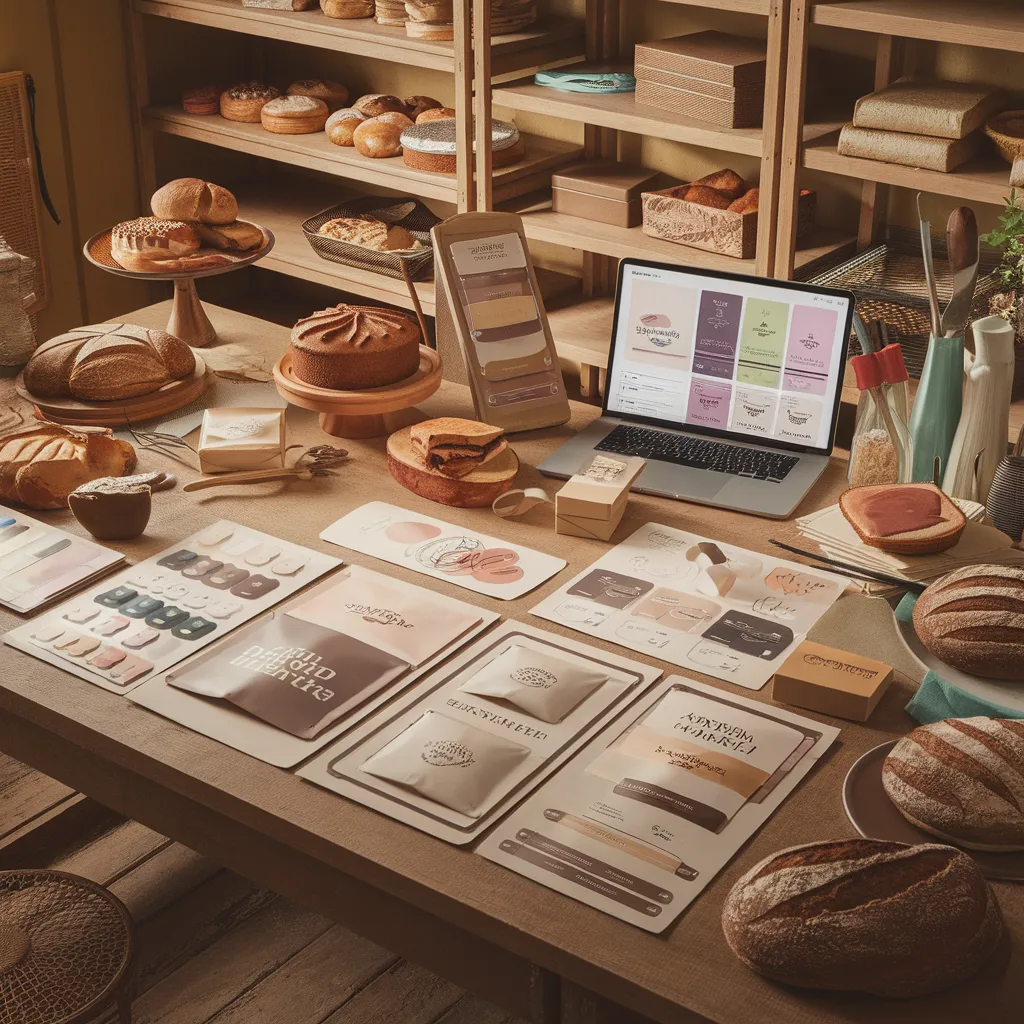
Bakery Packaging and Label Design Kit
The Complete Specification, Compliance, and Design System for Bakery Retail Packaging and Product Labels
The package is the product’s last chance to make a sale — and its first chance to make a loyal customer.
Between the moment a customer picks up a packaged bakery product and the moment they decide whether to buy it, the package communicates more information than any other element of the retail experience: the brand, the price expectation, the quality level, the ingredient provenance, the values behind the business, and the specific occasion or context the product is suited to.
A beautifully made product in inadequate packaging leaves money on the shelf. The customer who would have spent twelve dollars on a properly packaged artisan tart spends four dollars on the adequately packaged industrial one because the inadequate packaging communicated that the products were comparable.
Packaging design in bakery has two equally important dimensions that most packaging resources treat as separate: the design dimension (what the package looks like and what it communicates) and the compliance dimension (what the label must contain to be legally compliant in the markets where the product is sold). Failing at either dimension costs the business — one through lost sales, one through regulatory problems.
This kit addresses both.
📥 Instant digital download. The complete packaging and label system.
THE KIT — SECTION BY SECTION
SECTION ONE: THE PACKAGING SELECTION GUIDE
Material and Format Decision Framework
The packaging material selected determines the entire downstream design and production workflow. The decision framework covers the primary packaging categories relevant to artisan bakery retail:
Rigid boxes: The premium format for celebration cakes, gift assortments, and high-end pastry collections. The board weight categories (from E-flute microflute through rigid gray board), the window vs. no-window decision, the insert and tray options, the minimum order quantity reality for custom rigid boxes, and the unit cost at different volume tiers. The cases where premium rigid packaging ROI is positive (high-margin celebration products, gifting occasions, wholesale accounts where packaging represents the brand at retail) and where it is not.
Pillow bags and flat-bottomed pouches: The format for cookies, biscuits, granola, and loose product. The material options (clear OPP, kraft-lined, foil-lined for aroma retention), the seal types (heat seal, zip reseal, tin tie), the breathability requirements for different product types, and the MOQ landscape for printed versus plain-with-label formats.
Bakery boxes (standard and custom): The volume bread box, the pastry box, the cake slice box, the muffin and cupcake insert box. The standard sizes that fit most applications without custom tooling cost, and the custom sizing considerations for products that do not fit standard formats.
Clamshells and clear containers: The format for products where visibility drives purchase (decorated cakes, layered bars, fresh pastry). The fogging problem in refrigerated display, the anti-fog treatment options, and the seal type options for food safety compliance.
Paper bags and wrappers: The unprinted-with-label approach for artisan products where deliberate informality communicates handcraft. The kraft tissue paper wrapping for individual pastries, the bread bag options (plain paper, cellophane-windowed, greaseproof), and the cost-per-unit at different volume levels. 📦
The Food Safety Packaging Compatibility Guide
The packaging materials approved for direct food contact, the materials that require a food-contact liner, and the materials that are not food-safe for bakery applications. The oil resistance rating system for greasy or high-fat products. The humidity barrier requirements for different product shelf-life targets. The freezer-to-retail packaging specifications for products sold frozen.
SECTION TWO: THE LABEL COMPLIANCE FRAMEWORK
Mandatory Label Information by Market
The label compliance requirements that apply to bakery food products in three major regulatory frameworks:
United Kingdom (post-Brexit Food Information Regulations): The fourteen allergen declarations and the format requirements (the bold, italic, or contrast color highlighting that makes allergens identifiable in the ingredient list), the mandatory field list (product name, net weight, ingredients in descending order by weight, allergen declarations, best before or use-by date, storage instructions, name and address of business, country of origin for meat and fish products, and lot number or batch code), and the format size requirements (the minimum type size for mandatory information, the legibility standard).
European Union (EU Food Information Regulation 1169/2011): The equivalent framework with specific EU market requirements, the nutritional declaration requirements and when they apply to small businesses, and the country-of-origin marking requirements.
United States (FDA Food Labeling Requirements): The Nutrition Facts panel requirements (when mandatory, what format), the ingredient list requirements, the allergen statement under the FASTER Act (the nine major allergens: milk, eggs, fish, shellfish, tree nuts, wheat, peanuts, soybeans, sesame), the net weight declaration, the name and place of business of the manufacturer or distributor, and the exemptions available to small businesses below specific annual revenue thresholds.
The workbook provides the compliance checklist for each market framework — the label review tool completed before a label is sent to print. ✅
The Allergen Labeling Deep-Dive
The area of bakery label compliance with the highest regulatory and reputational risk. The allergen framework covers: the fourteen EU/UK allergens in full (celery, cereals containing gluten, crustaceans, eggs, fish, lupin, milk, molluscs, mustard, nuts, peanuts, sesame seeds, soybeans, sulphur dioxide and sulphites above 10mg/kg), the “may contain” statement (when it is required, when it is appropriate, and when it is not sufficient as a substitute for proper allergen control), the cross-contamination risk assessment for bakeries producing multiple product lines, and the allergen matrix documentation system for bakeries with multiple SKUs.
The Best Before vs. Use-By Distinction
The critical difference that has food safety and commercial implications: use-by dates apply to products where safety is the concern (products that may be unsafe after the date regardless of appearance), best before dates apply to products where quality is the concern (products that may be less enjoyable after the date but are not unsafe). The categorization guide for common bakery products, and the date format requirements by market.
SECTION THREE: THE LABEL DESIGN SYSTEM
The Label Format Specification Guide
The technical specifications for producing labels that print correctly, apply cleanly, and look professional in retail:
Label dimensions and shape for common bakery packaging formats: the round seal (30mm, 40mm, 50mm diameter — the common application diameters and what they fit), the rectangular label (the standard roll sizes that fit consumer label printers), the full-wrap label for cylindrical containers, and the front-panel and back-panel label system for flat packaging.
The bleed, safe zone, and text-free margin specifications for professional label printing. The resolution requirement for label artwork (300dpi minimum for print — the specification most labels ordered from online label printers fail because the artwork was designed in a screen-resolution format).
The Label Layout Templates
Front label layouts for six packaging formats: the bakery box front panel, the pillow bag front panel, the round jar or container label, the rectangular wrapper, the kraft bag label, and the gift box top panel. Each template shows the hierarchy of elements (the brand name prominence, the product name, the key visual, the net weight placement) and the margin specifications.
Back label layouts showing the regulatory information arrangement: the ingredients panel, the allergen statement, the nutritional information if required, the contact information, the storage and best before, and the barcode position. The layout that fits all mandatory information legibly without the back label looking like a terms-and-conditions document. 📐
The Barcode Integration Guide
When a barcode is required (any product sold through retail channels where the retailer scans at checkout), the barcode type selection (EAN-13 for European retail, UPC-A for US retail, QR codes for direct-to-consumer digital applications), the GS1 registration process for obtaining a legitimate prefix, the barcode size minimums for scanner readability, and the color requirements (dark bars on light background — the specific color contrast minimum).
SECTION FOUR: THE PACKAGING SUPPLIER SOURCING GUIDE
The Sourcing Framework
The packaging procurement process: the specification sheet (the document sent to packaging suppliers that contains all the technical requirements the packaging must meet — the format that generates comparable quotes rather than incomparable proposals), the MOQ negotiation guide (the conversation with packaging suppliers about minimum order quantities, the alternative options for bakeries not yet ordering at MOQ-meeting volumes), and the sample evaluation protocol (the seven things tested on every packaging sample before committing to a production order).
The Sustainability Options Guide
The packaging materials and formats with reduced environmental impact: the compostable options (certified industrially compostable versus home compostable — the difference matters for customer communication), the recycled content options, the plastic-free alternatives for applications where plastic has been conventional, and the honest assessment of sustainability trade-offs (the compostable packaging that requires industrial composting infrastructure the customer may not have access to, the recycled kraft paper that has inferior moisture resistance for certain product types). The communication guide for sustainability packaging claims — the regulatory landscape for “eco-friendly” and “compostable” label claims. 🌱
📂 COMPLETE FILE LIST
📦 Complete packaging selection guide (PDF) | ✅ Label compliance checklist — UK/EU and US frameworks (editable) | 🏷️ Label layout templates for 6 packaging formats (PDF + Canva-compatible) | 📐 Label technical specification guide for print production (PDF) | 🔬 Allergen matrix template for multi-SKU bakeries (Excel + Google Sheets) | 🌱 Sustainable packaging options guide (PDF) | 📋 Packaging supplier specification sheet template (editable)
Reviews
There are no reviews yet.